Radio Central Equipment Breakdown
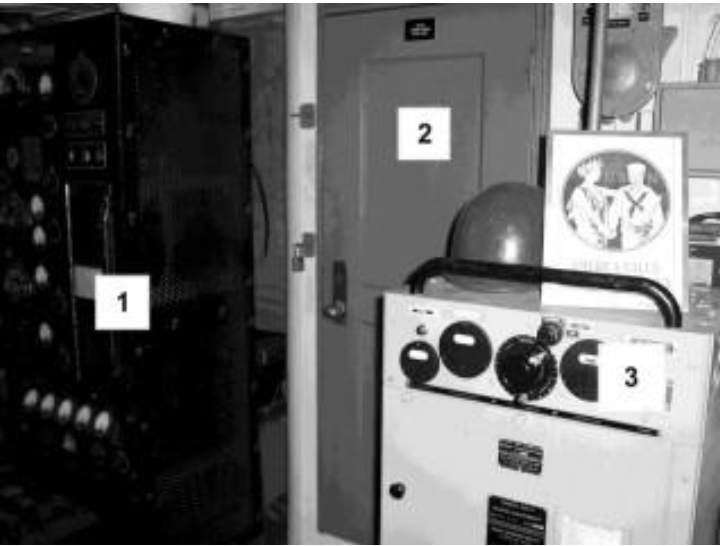
Radio Room, Forward
TBL Transmitter: Low and medium-frequency, long-range Morse code transmitter.
Coding Room: This is where received messages were decoded, and messages to be sent were coded before transmission.
SA Transmitter: This is the transmitter for the Air Search Radar. The copper tube coming out of the top of the unit is the wave guide, which carries the beam up the mast to the antenna.
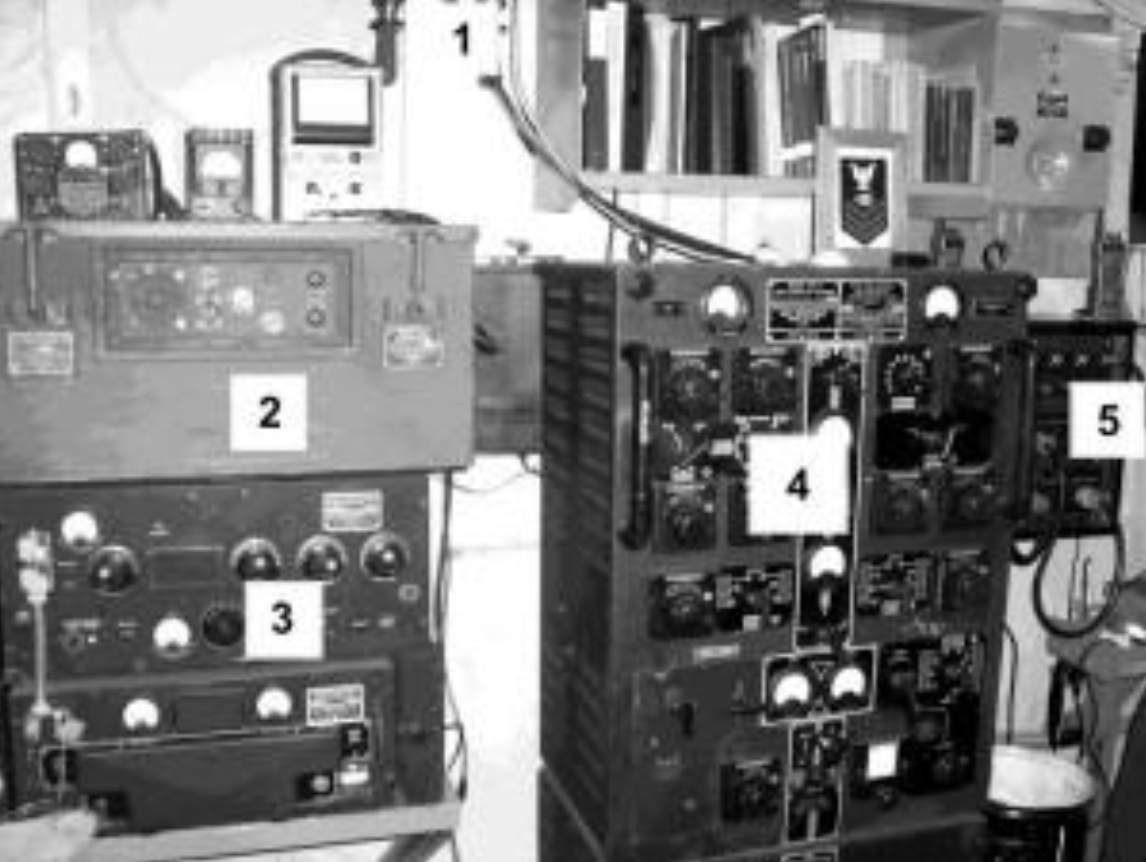
Radio Room, Aft
Antenna Connections: These wires connect the transmitters to the ship’s radio antennae. They can be disconnected quickly in case of damage or if a man is climbing the mast.
MAN Radio: This is an Army-issued radio set. It could be used for communications between the ship and infantry units on land.
TBS Radio: TBS does not stand for “Talk Between Ships.” Transmitters were labeled with a “T” followed by an arbitrary nomenclature of letters. The TBS allowed for short-range voice communication. It was one of the most important sets carried by the SLATER. It is the WWII equivalent of a cellphone.
TDE Radio: This was the high-frequency, short-range Morse transmitter.
Trunk Line Connectors: This switchboard connected the Morse keys at the radio operators’ stations to the radio transmitters.
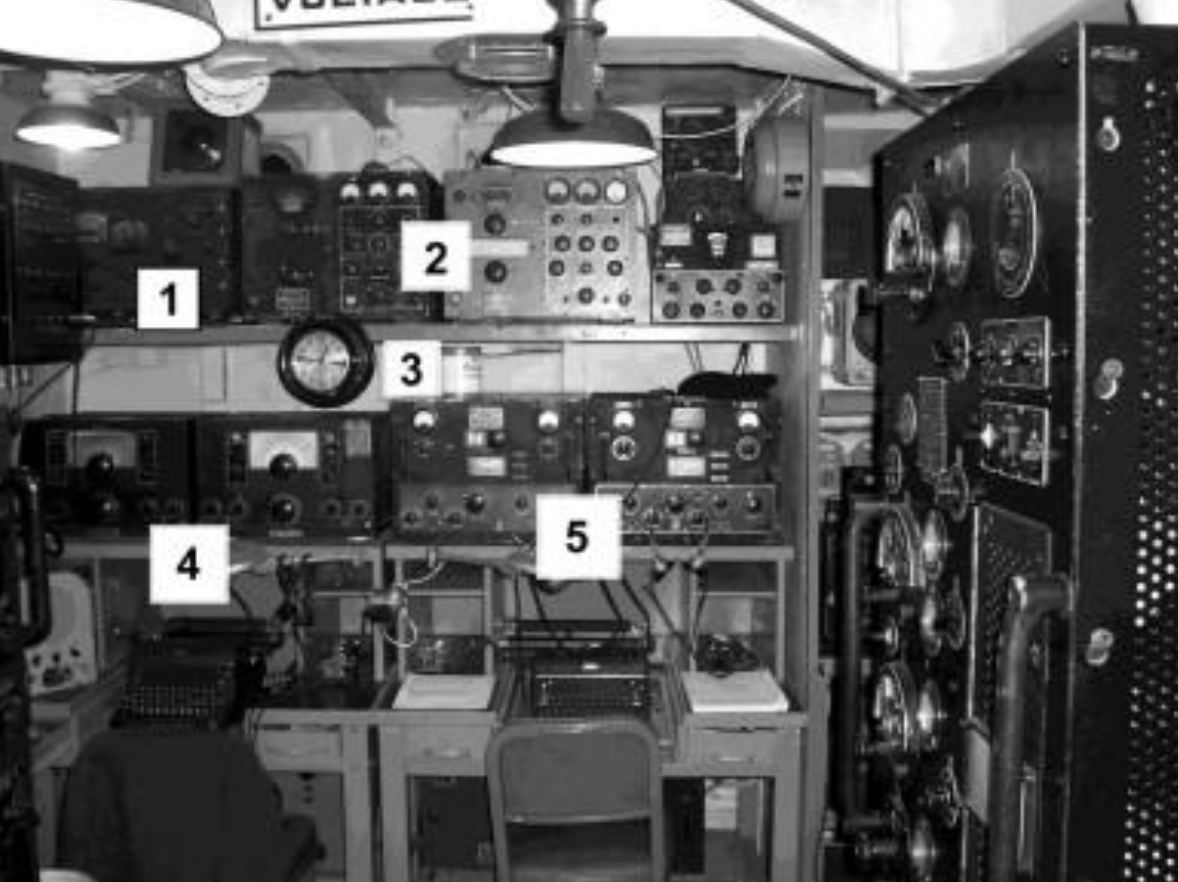
Radio Room, Port
Entertainment Radio: This set could be used to pick up the Armed Forces Radio Network, Lord Haw Haw, Axis Sally, or Tokyo Rose.
Radio Room Clock: The red wedges on the clock represent times when all radio operators must monitor the distress frequency. This came about as a result of the TITANIC’s sinking.
Operator Position 1: This was the operating position for one radioman. It consists of two radio receivers, a typewriter—called a mill—and a Morse transmitting key.
Operator Position 2: This is the second operator’s position. Both positions were always manned. From these positions, radio men would guard the Fox network, called Guarding Fox. The Fox network was a continuous stream of Morse Code messages carrying news, weather information, orders, etc., to the fleet. It operated in a loop, meaning that if you missed a message, it would be repeated several hours later. Think of it like any other 24-hour news channel. Ships operated under radio silence, though that is an often misunderstood phrase. Radio silence does not mean that ships are absolutely prohibited from transmitting messages. If a ship had a vital report to make, such as a submarine sighting or damage, a transmission was made. Radio silence really meant that there was no idle chatter allowed. Transmissions were made only when necessary.